




Are you ready to streamline your revenue processes and drive predictable outcomes?
With the new Revenue Cadences feature in Clari, you can operationalize your team's rhythm by creating "moments" that guide your team to focus on the right activities at the right time.
A "moment" is an internal sales activity designed to drive alignment, operational rigor, and execution of your overall revenue cadence. Within Clari, you can create two distinct types of moments: 1:1 Moments and Team Moments. Understanding the difference is key to setting up your cadences for success.
1:1 Moments: Private and Personalized Coaching
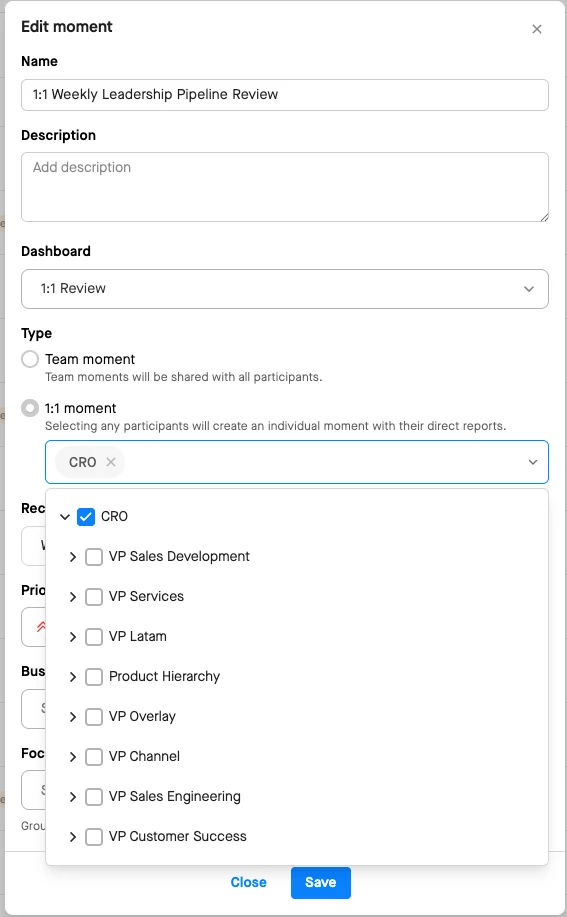
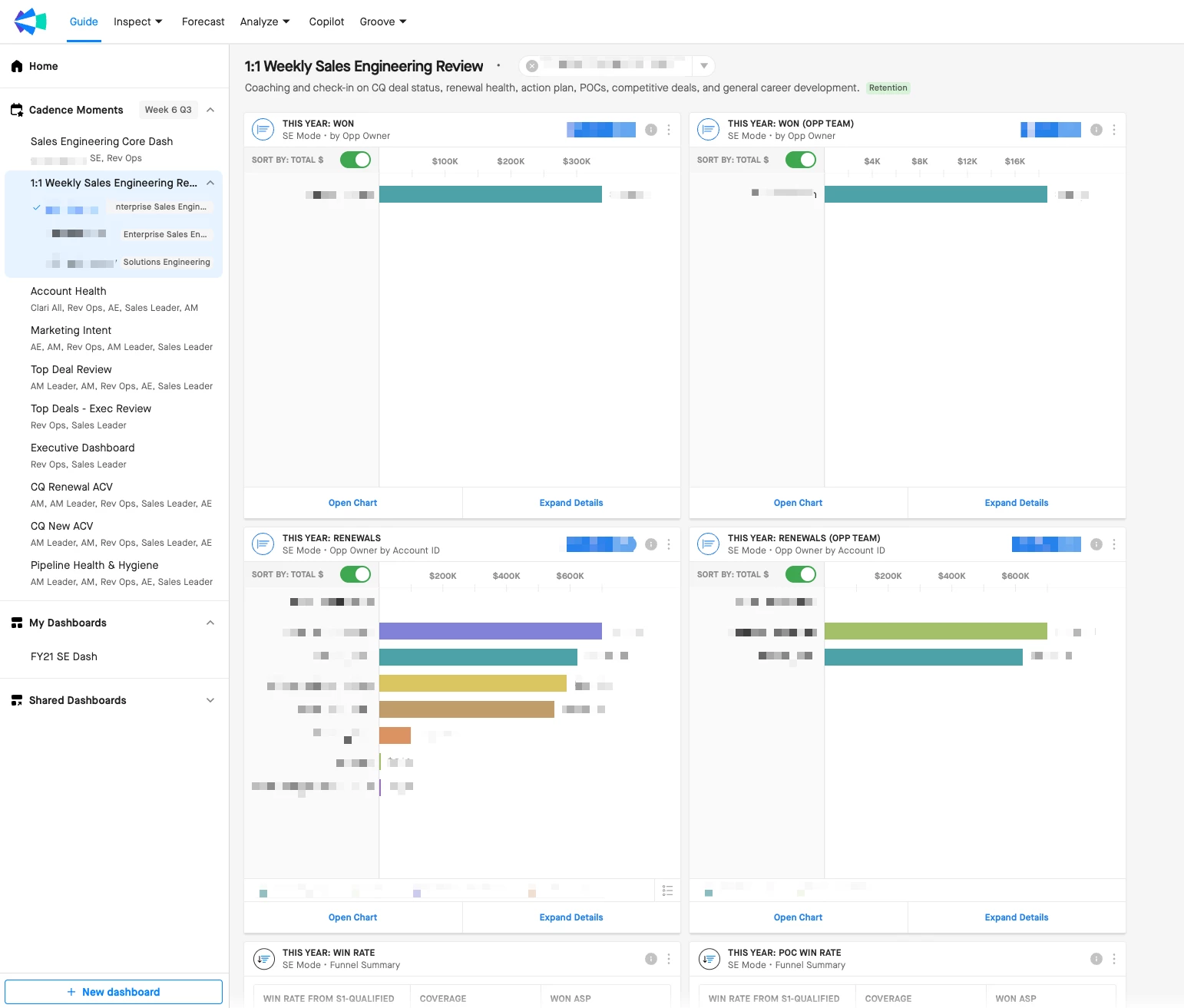
A 1:1 moment is a private space specifically for activities between a manager and their direct report(s). This moment is private between these two participants, and only visible to them.
- Best For: Weekly or bi-weekly check-ins to discuss current quarter focus, pipeline generation, deal coaching, identifying risk areas, and developing action plans.
- How it Works: Admins can select a node in the organizational hierarchy (e.g., all VPs) and the system automatically infers the manager-report relationships. The moment is then scoped to the report's data, which is a major benefit as it automatically updates when reporting structures change.
- Goal: Facilitate a high-impact coaching session where reps can strategize deals, inspect for risk, and execute with confidence.
Team Moments: Shared Insights for Group Alignment
A Team Moment is a shared moment designed for activities involving a group of users, roles, or a team within the hierarchy. Unlike 1:1 moments, the data and content in a team moment are shared with all participants. The data in a team moment is not private between a manager and report - it is shared with all Moment participants.
- Best For: Group activities like weekly forecast calls, pipeline reviews, or quarterly business reviews (QBRs) where everyone needs to see the same content and align on a shared goal.
- How it Works: Admins must manually add each participant by name or role, ensuring everyone who needs to collaborate has access to the content.
- Goal: Drive better performance across and within teams by providing a single source of truth for key insights and fostering alignment on shared objectives.
Key Takeaway:
The distinction between these two moment types allows you to tailor your revenue cadences precisely to your team's needs. You can create private, focused coaching sessions for individual performance and collaborative, transparent meetings for team-wide alignment, all within a single platform. This helps eliminate manual prep work and ensures every minute is spent on strategy and execution